



Automatically map your business logic, metrics, and definitions across all your systems

Continuously resolve mismatches, anomalies, and schema drift without manual intervention

Deliver structured, contextualized intelligence directly to copilots, dashboards, and decision workflows






For the past two years, "AI regulation" has been the topic I hear discussed on panels around 4pm in a banquet hall while the audience quietly checks in for their flights home. This week we saw that conversation take center stage.
You know times are strange when Dario Amodei, Sam Altman and Elon Musk end up on the same side of an argument. All three publicly agreed to slow things down in racing towards new AI. Things are moving at such a crazy pace that these leaders effectively agreed to a corporate group hug on regulation moving forward. In Washington, lawmakers are workshopping a "duty of care" for AI developers, ensuring they prove they've considered obvious disasters before shipping. This could be evidence requests, outside testing, actual consequences.
Read the headlines and you'd assume sweeping federal rules arrive Tuesday, gift-wrapped, with a compliance checklist. But they will not. What's actually coming is more of a mess – federal action is still firmly a maybe, state rules are breeding in captivity, and the rest of us are making expensive decisions with no settled playbook. States have already legislated chatbot safeguards, automated decision-making, public-sector procurement, inventories and third-party assessment.
But if we are talking real talk for a minute, we know there is no single path forward here. There are fifty of them, and like many enterprise workflows they do not always connect.
Which is why this conversation cannot stop at model safety.
The fallout: governance quietly becomes infrastructure
For most businesses, the real consequence isn't another PDF nobody reads. It's the dawning expectation that you can explain, out loud, to a stranger who is not impressed, how AI is being used inside your company.
This could mean questions like:
- What data is actually feeding this thing?
- Who owns the definitions behind the metrics it produces?
- Can we trace an output back to a source we'd defend in a meeting?
- Are access controls applied consistently, or just enthusiastically in certain departments?
- If a regulator, a customer, or your own risk team asks for receipts, is the answer "one afternoon" or "please don't"?
Not one of those is an AI question. They're data questions with an AI conference lanyard :)
The Preql lens
We're keeping calm and continuing on. Regulation is going to keep evolving. Definitions will shift. Jurisdictions will disagree at volume. But the requirement underneath all of it hasn't moved an inch: you need visibility and confidence in the data behind decisions that matter.
That's the real work. Turning raw, fragmented data into something governed and actually usable. Appreciating that data is just data and the definitions are the missing piece. Not governance as a compliance costume you wear for audits, but a shared foundation that lets data teams, operators and leaders move fast without losing the plot.
AI raised the stakes on every company's data strategy. Waiting for regulatory clarity is not a strategy, it's a hobby. Clear metrics, trusted definitions, accountable ownership and a traceable path from data to decision: that's the strategy.
Other things we've been up to
While keeping calm about the existential crisis of humanity (busy week), we were at the US Open, soaking up the New York energy and watching what precision, preparation and performance look like when they all show up under pressure at the same time.
There is probably a data metaphor buried in there somewhere. We'll spare you.

Talking data and tennis at Flushing Meadows for the US Open 2026.
We also took Preql to FinovateFall, where the team demoed alongside fellow Fintech innovators helping financial institutions and enterprises extract more value from the data they already have. Preql AI was among the 72 companies demoing at this year's event, with a focus on helping organizations address their data quality challenges and appreciate the definition and metrics part of it all
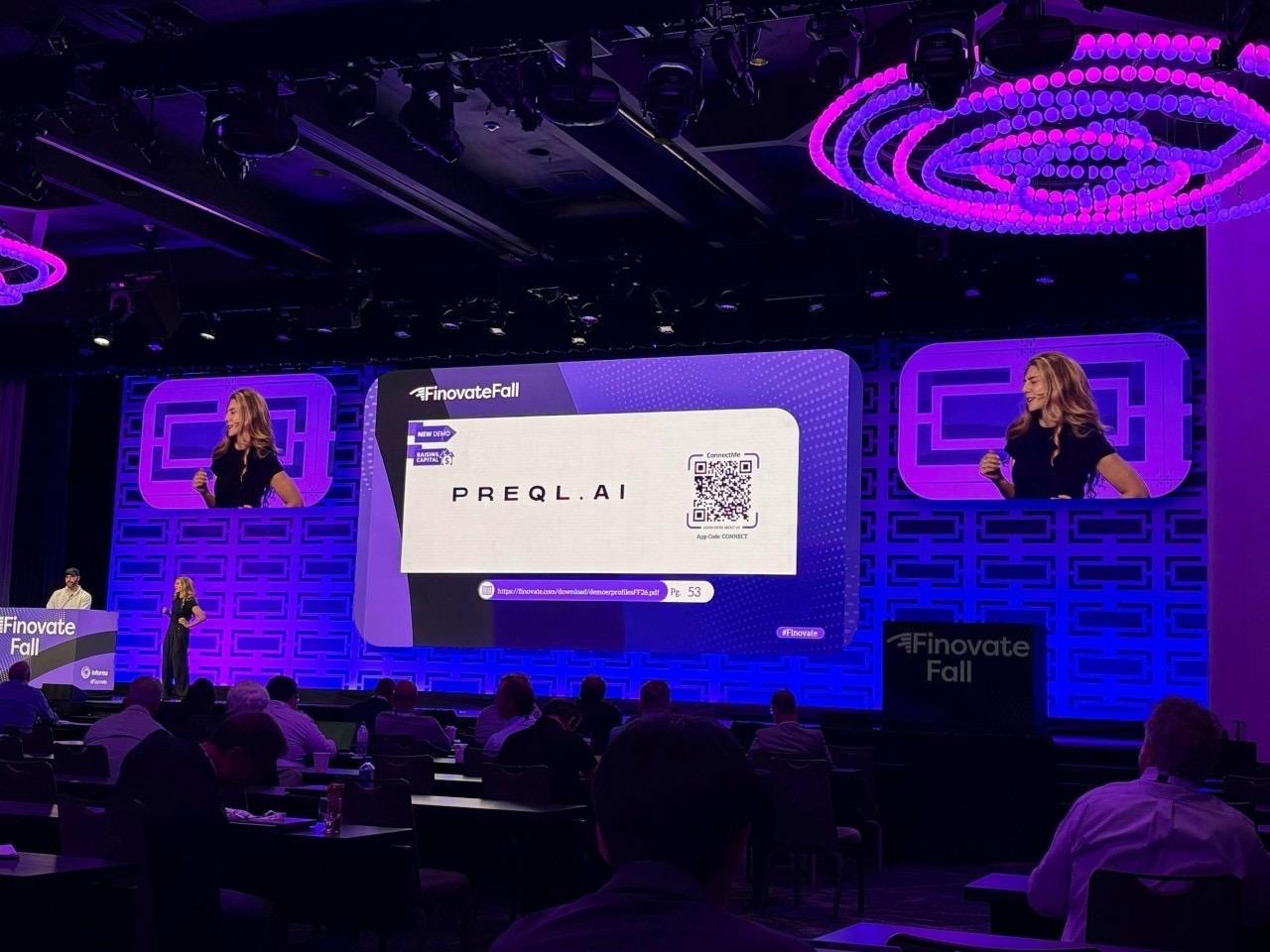
Finovate Fall 2026 Demo Day.
For us, the Finovate conversation reinforced a theme we hear across industries: AI ambition is high, but dependable data remains the difference between a compelling proof of concept and something teams can confidently put into production.
As the market rushes to define the rules of AI, we will keep building toward the same outcome: making data more usable, more trustworthy, and more ready for what comes next.
Have a great week!
Gabi
Explore more